The Complete Stairlift Buying Guide

Buying a stairlift is a decision most families make once. There's no reason you'd know how the industry works, what a fair price looks like, or what the differences between brands actually mean. That's exactly why we created this guide.
Everything here is based on verified data, genuine manufacturer information, and independent research. No brand has influenced our recommendations. We'll cover types, brands, costs, installation, grants, VAT relief, and every question we've seen families ask.
Types of Stairlift
The type of stairlift you need is determined by your staircase, not your personal preference. There are four main types:
Straight Stairlifts
For staircases that go from bottom to top in a single straight run with no turns or landings. These are the most common, most affordable, and quickest to install.
- Price: £1,800–£5,500 new (average £2,300–£2,500)
- Installation: 2–4 hours
- Lead time: Often within days
Read our full straight stairlift guide →
Curved Stairlifts
For staircases with any bend, turn, L-shape, U-shape, intermediate landing, or spiral. The rail is custom-manufactured to match your exact staircase.
- Price: £3,800–£8,000 standard (average £5,500); £8,000–£12,000 for complex custom
- Installation: 4–8 hours
- Lead time: 2–4 weeks (for custom rail manufacturing)
Read our full curved stairlift guide →
Outdoor Stairlifts
Weather-resistant stairlifts for external steps — garden stairs, front door steps, or access to raised patios. Built to withstand rain, frost, and UV exposure.
- Price: £2,000–£6,000 (average £3,500)
- Key feature: Weatherproof covers and marine-grade components
Standing (Perch) Stairlifts
For users who have difficulty bending their knees or sitting down — common with severe arthritis or after knee/hip surgery. These stairlifts have a raised perch seat so you travel in a semi-standing position.
- Price: From approximately £2,000
- Best for: Users with knee/hip issues who can't sit fully
What Does a Stairlift Cost?
This is the question every family asks first. Here's the honest answer, based on verified industry data:
| Type | New (installed) | Reconditioned | Rental (annual) |
|---|---|---|---|
| Straight | £1,800–5,500 (avg £2,300–2,500) | £595–3,100 | £520–1,080 |
| Curved | £3,800–8,000 (avg £5,500) | £1,395–4,475 | £1,340–2,240 |
| Outdoor | £2,000–6,000 (avg £3,500) | £1,000–3,000 | Varies |
| Standing/perch | From ~£2,000 | Limited availability | Varies |
What Affects the Price?
- Staircase type: Straight vs curved is the single biggest price factor
- Brand: Stannah charges a premium; Acorn and Handicare are typically more competitive
- New vs reconditioned: Reconditioned saves 40–60% with shorter warranties
- Features: Powered swivel, folding rail, heavy-duty capacity, remote controls
- Rail length: Longer rails cost modestly more
- Installation complexity: Unusual staircase configurations may incur extra cost
Estimate Your Cost
Stairlift Cost Estimator
Answer a few questions for an estimated price range.
Average:
Prices include standard installation. Your actual quote may vary based on staircase configuration and chosen features. See full price data →
The Major Brands Compared
Three brands dominate the UK stairlift market. Each has genuine strengths and weaknesses:
Stannah — 8.4/10 (Editor's Choice)
- Est. 1867, 1,000,000+ stairlifts installed worldwide
- Family-owned British company, based in Andover
- Trustpilot: 4.7/5 from 6,106 reviews
- Strengths: Reliability (9.0), aftercare (9.2) — largest engineer network in the UK
- Weakness: Premium pricing (value score 7.5)
- Best for: Buyers who prioritise peace of mind and long-term service
Handicare — 8.1/10
- Now owned by Savaria (Canadian accessibility company)
- Products sold through Companion (sales arm) and Age UK
- Trustpilot: 4.3/5 from 1,874 reviews (rating has dropped recently)
- Strengths: Slimmest rail (1100 model), up to 200kg capacity, good comfort (8.5)
- Weakness: Lower Trustpilot rating, smaller brand recognition
- Best for: Narrow staircases, heavy-duty requirements, buying through Age UK
Acorn — 7.8/10
- Based in Steeton, West Yorkshire — manufactured in Yorkshire
- Strong TV advertising presence and brand recognition
- Trustpilot: 4.8/5 from 10,952 reviews (highest of any brand)
- Strengths: Value for money (8.5), highest Trustpilot score, quick installation
- Weakness: Which? flagged sales pressure concerns, smaller aftercare network
- Best for: Budget-conscious buyers, standard straight stairlifts
See our Stannah vs Acorn comparison for a detailed head-to-head. Visit our reviews hub for complete brand ratings.
New vs Reconditioned vs Rental
New Stairlifts
A new stairlift comes with a full manufacturer warranty (typically 1–2 years), the latest features, and your choice of configuration. This is the most expensive option but provides the most reassurance.
Reconditioned Stairlifts
Reconditioned (also called "refurbished") stairlifts are previously-used units that have been serviced, tested, and restored to working condition. They typically save 40–60% compared to new, but come with shorter warranties (often 6–12 months).
- Reconditioned straight: from £595
- Reconditioned Acorn-specific models: from £995
- Reconditioned curved: from £1,395 (less common, as curved rails are bespoke)
Reconditioned is a good option if you're on a budget and the stairlift is for short-to-medium-term use. For long-term use, the shorter warranty period is a consideration.
Rental
Rental makes sense for temporary needs — recovering from surgery, short-term care of a relative, or while waiting for grant funding. Straight stairlift rental costs approximately £10–15 per week, plus an installation fee from £300. Rental typically includes servicing and repairs.
For curved stairlifts, rental is more expensive (approximately £20/week plus £950+ installation) due to the custom rail requirement.
Grants and Funding
Several grants can help cover the cost of a stairlift. The most significant is the Disabled Facilities Grant (DFG):
Disabled Facilities Grant (DFG)
| Region | Maximum Grant | Key Details |
|---|---|---|
| England | £30,000 | Means-tested (£6,000 savings threshold). Requires OT assessment. |
| Wales | £36,000 | Means test removed for small/medium adaptations. |
| Scotland | 80–100% | Scheme of Assistance. Coverage varies by council. |
| Northern Ireland | £35,000 | DFG since Feb 2023. Up to £70,000 in exceptional circumstances. |
Key facts about the DFG:
- Around 60,000 people receive DFG adaptations funding each year
- Government budget: £761 million for 2025–26 (including a £50 million uplift announced January 2026)
- You need to be disabled (assessed by an occupational therapist — no formal registration is needed)
- The grant is means-tested in England with a £6,000 savings threshold
- Applications go through your local council
- The NHS does not directly fund stairlifts
Other Funding Sources
- Independence at Home grants: Available in some areas, but applications must come through a health or social care professional — individuals cannot apply directly
- Charitable grants: Organisations like Turn2Us can help you search for charitable grants you may be eligible for
- Local council schemes: Some councils operate additional grant or loan schemes beyond the DFG
VAT Relief
Stairlifts qualify for VAT relief, which can save you hundreds of pounds:
- 0% VAT for disabled users: If you have a disability, you pay no VAT on the supply and installation of a stairlift. You sign a simple self-declaration form — no medical certificate or formal registration is required. This saves 20% of the purchase price.
- 5% VAT for users aged 60+: If you're over 60, you pay reduced 5% VAT on supply and installation. This saves 15% of the purchase price.
- Standard 20% VAT: Applies if neither relief applies to you.
Important: The reduced 5% rate for over-60s applies only to supply AND installation together. Repairs are only zero-rated under disability relief — over-60s repairs are charged at the full 20% VAT rate.
The Installation Process
Stairlift installation is less disruptive than most people expect. Here's the typical process:
Step 1: Home Survey (Free)
A surveyor visits your home to measure the staircase, discuss your needs, and recommend the most suitable stairlift. This takes 30–90 minutes depending on the staircase complexity. You'll receive a quote either on the day or within 48 hours.
Key tip: Get at least two surveys from different companies. This gives you comparison quotes and lets you see which surveyor inspires the most confidence.
Step 2: Order and Lead Time
- Straight: Standard rails cut to length — can be installed within days
- Curved: Custom rail manufactured — typically 2–4 weeks
Step 3: Installation Day
The rail is fixed to the stair treads (not the wall). No structural work is needed. No planning permission is required.
- Straight: 2–4 hours
- Curved: 4–8 hours
The installer will test the stairlift thoroughly, demonstrate all controls, and ensure the user can operate it confidently before leaving.
Step 4: Aftercare
After installation, you'll have a warranty period (typically 1–2 years for new stairlifts). Annual servicing is recommended and is often a condition of the warranty — though it is not a legal requirement for private homes. Service plans typically cost £100–300 per year.
What to Look For When Choosing
Beyond brand and price, consider these practical factors:
Weight Capacity
Standard stairlifts are rated for 120kg (approximately 19 stone). If the user weighs more than this, heavy-duty models are available — Handicare's 1000 series supports up to 200kg. Never round up on weight capacity — this is a safety-critical specification.
Seat Swivel
A powered swivel seat at the top of the stairs allows the user to turn safely towards the landing before standing up. This is especially important for users with limited mobility. Most premium models include this; basic models may have manual swivel only.
Folding Rail
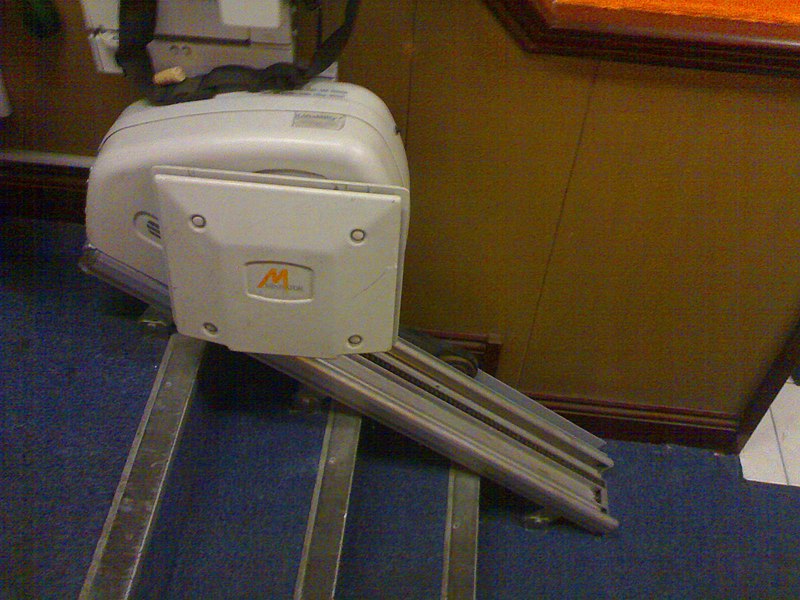
Some straight stairlifts have a folding rail section at the bottom to avoid obstructing a doorway or hallway. This is a powered or manual fold that tucks the rail out of the way when the stairlift is not in use.
Seatbelt
All stairlifts come with seatbelts. Check that the belt type is comfortable and easy for the user to operate independently — retractable lap belts are generally preferred over more complex harness systems.
Controls
Most stairlifts use a simple joystick or toggle switch on the armrest. Some also come with remote controls (useful for calling the stairlift to you). The controls should be comfortable for the user — consider grip strength and dexterity.
Rail Width
If your staircase is narrow, rail width matters. The Handicare 1100 has the slimmest rail on the market. Wider rails don't necessarily mean better — but on a narrow staircase, a slim rail leaves more room for other household members to walk past.
Power Source
Most modern stairlifts run on DC power (rechargeable batteries charged from a mains connection at the top or bottom of the stairs). This means the stairlift works even during a power cut. The mains connection charges the batteries continuously.

Avoiding Sales Pressure
Which? consumer research has found that pressure selling is a problem across the stairlift industry. More than a third of consumers reported feeling pressured during the sales process. Here's how to protect yourself:
- Never sign on the day. Any salesperson who tells you the price is "only valid today" is using a pressure tactic. Genuine offers don't expire overnight.
- Get at least two quotes. This is the single most effective way to ensure a fair price and gives you leverage in negotiations.
- Know your rights. You have a 14-day cooling-off period for any contract signed in your home. This is a legal right under the Consumer Contracts Regulations 2013.
- Bring someone with you. Having a family member or friend present during the home survey provides support and a second perspective.
- Check our price data. Use the pricing tables in this guide as a benchmark. If a quote is significantly above our ranges for a standard installation, challenge it or walk away.
- Look for BHTA membership. The British Healthcare Trades Association has a code of practice. Members are not immune to bad behaviour, but there's a complaints process.
Ongoing Costs
The purchase price is the largest cost, but budget for these ongoing expenses:
| Cost | Amount | Frequency |
|---|---|---|
| Electricity | A few pence per day | Ongoing |
| Annual servicing | £100–300 | Yearly (recommended, not legally required) |
| Battery replacement | £50–200 | Every 3–5 years |
| Extended warranty | £100–500 | Yearly (after initial warranty expires) |
Over 10 years, expect to spend £2,000–£6,000+ on running costs on top of the purchase price. Factor this into your total budget, especially when comparing a cheaper stairlift with expensive aftercare against a pricier stairlift with inclusive service plans.
Selling or Removing a Stairlift
When a stairlift is no longer needed — whether through improved health, a move to a different property, or bereavement — you have several options:
- Sell back to the manufacturer: Some companies will buy back their stairlifts, though the buyback price is typically low
- Sell privately: Straight stairlift rails have resale value because they can be reused. Curved rails have almost no resale value because they're bespoke.
- Donate: Charities and social enterprises sometimes accept working stairlifts
- Professional removal: Most stairlift companies offer removal services. The staircase is left with small screw holes in the treads that can be filled.
Pre-Purchase Checklist
Before committing to any stairlift purchase, work through this checklist:
- Confirm your staircase type. Straight or curved? This determines your options and budget.
- Check grant eligibility. Contact your local council about the Disabled Facilities Grant before purchasing privately.
- Claim VAT relief. Ensure you'll receive 0% (disabled) or 5% (over 60) VAT — ask the supplier to confirm.
- Get at least two quotes. From different brands if possible.
- Compare total costs. Purchase price + servicing + warranty. A cheaper stairlift with expensive aftercare may cost more overall.
- Check weight capacity. Ensure the model is rated for the user's weight, with margin. Never rely on a model that's at its stated maximum.
- Ask about warranty terms. What's covered, for how long, and what invalidates it?
- Confirm the cooling-off period. You have 14 days to cancel any contract signed in your home.
- Consider the aftercare network. How quickly can the company send an engineer to your area?
- Think about the future. Will the user's needs change? A model with a powered swivel or higher weight capacity may be worth the extra cost now.
Need Help Deciding?
Read our detailed brand reviews: Stannah, Acorn, and Handicare. For a head-to-head comparison, see Stannah vs Acorn.
Have more questions? Browse our frequently asked questions.